
Enterprise Storage Server PCB Manufacturer
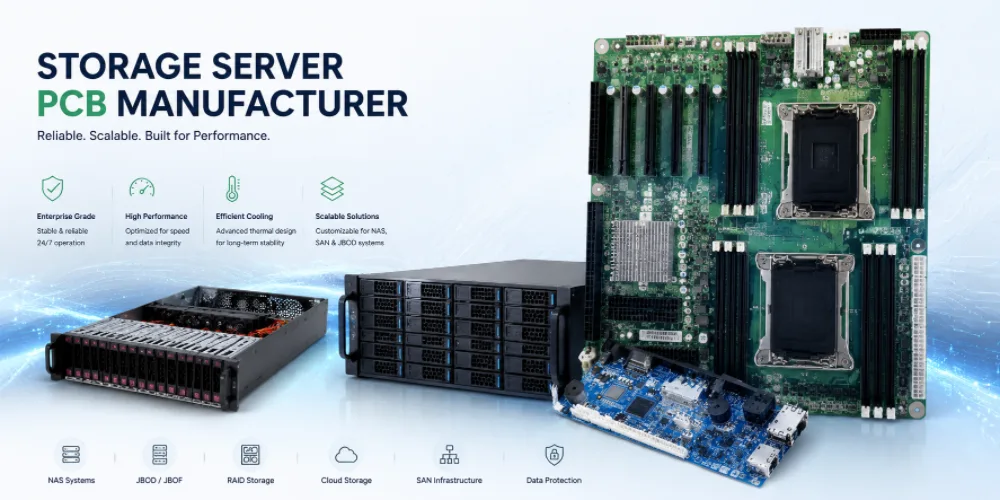
Figure 1. Storage Server PCB
Highleap Electronics is a storage server PCB manufacturer for enterprise storage OEMs, hyperscaler ODMs, cloud storage providers, and edge storage system builders. Our portfolio spans storage server mainboards (single-controller, dual-controller active/active, scale-out storage cluster nodes), NVMe backplanes for PCIe Gen4 and Gen5 hot-swap drives (U.2, U.3, E1.S, E3.S), SAS backplanes and SAS expanders for hybrid and bulk-storage chassis, HBA carrier boards and NVMe switch carriers, RAID controller carrier boards, NVMe-oF host and target adapter boards, and the full set of management and infrastructure boards inside modern storage chassis. Boards built to IPC-A-600 Class 2 standard with Class 3 acceptance available, certified to IATF 16949, qualified for Tier-1 storage OEM AVL, with documented change control and scheduled-delivery programs supporting multi-year storage platforms.
Table of Contents
- What Storage Server OEMs Need from a PCB Manufacturer
- Storage Server Mainboard Builds — Single, Dual-Controller, Scale-Out Node
- NVMe Backplane Manufacturing — Gen4, Gen5, U.2/U.3/EDSFF
- SAS Backplanes, Expanders & Hybrid Drive Chassis Builds
- HBA, RAID & NVMe Switch Carrier Board Manufacturing
- NVMe-oF Host & Target Adapter Board Builds
- Engaging Highleap as Your Storage Server PCB Manufacturer
1. What Storage Server OEMs Need from a PCB Manufacturer
Storage server programs run on different economics than compute servers. Volumes are typically higher per platform (a single storage product line may ship 50,000+ units annually across hyperscaler and enterprise channels); product lifecycles are longer (5-7 years in market is common); spare-parts and field-replaceable-unit support extends 7-10 years beyond end of production. The PCB manufacturer that supports a storage program is committing to those timelines. We supply across the storage server portfolio under the same quality flow that powers our broader server PCB manufacturing programs.
Engineering team requirements
- NVMe backplane design partnership: hot-swap connector integration, controlled-impedance routing from drive bay to controller, back-drilled vias for Gen5 NVMe stub control.
- Dense drive integration DFM: 24, 36, 60, even 90 drive bays per 4U chassis — backplane PCB area is small relative to the connector and routing density required.
- SAS expander layout review: high-port-count expanders (24 to 36 ports per chip) require careful routing to maintain SAS signal integrity at 12/22.5 Gbps.
- Heavy copper for storage chassis power distribution: 60+ drives draw 600W+ in idle, much more under sustained workload; backplane power planes need 2-3 oz copper on dedicated layers within the multilayer PCB stackup.
- Material substitutability documentation: long product lifecycles mean material EOL events will happen; documented substitution paths are essential.
Procurement team requirements
- Multi-year supply commitment: storage platforms ship 3-5 years; spares ship another 5-7 years.
- Forecast-driven capacity: hyperscaler storage demand can ramp 5-10× in a quarter on a new platform; capacity allocation against rolling forecast is critical.
- AVL qualification at multiple tiers: Tier-1 storage OEMs, hyperscaler ODM partners, and end-customer integrators all may maintain separate AVLs.
- Cost transparency at PCB level: material, copper weight, layer count, and panelization all affect unit cost; transparent BOM-level analysis supports cost-down initiatives.
- Hot-swap connector procurement: some programs procure SAS or NVMe connectors as consigned material; supplier handles assembly without taking material ownership.
- EMC compliance documentation: storage products undergo FCC, CE, and other regulatory testing; PCB design and fabrication consistency supports passing tests on first submission.
Compliance and quality system alignment
- IATF 16949 certification: baseline for industrial-grade PCB suppliers.
- ISO 9001: universal quality system foundation.
- UL recognition: for storage products requiring safety certification.
- ECCN classification support: for export-controlled storage products serving government, defense-adjacent, or critical infrastructure markets.
- Conflict minerals reporting: Section 1502 compliance with documented sub-tier supplier reporting.
2. Storage Server Mainboard Builds — Single, Dual-Controller, Scale-Out Node
Storage server mainboards span a wider range of architectures than compute server mainboards. The dominant patterns we build:
Single-controller mainboards (entry and SMB storage)
- Architecture: single CPU socket (or single SoC) with direct attachment to drive backplane and host network interfaces.
- CPU options: Intel Atom for entry; Intel Xeon-D, AMD Ryzen Embedded for higher-performance entry products.
- Layer count: 8-12 layers typical.
- I/O: 2-4 GbE ports, USB 3.x for management console, PCIe slot for HBA expansion.
- Volume: high-volume SMB and prosumer storage; cost-sensitive PCB design.
- Material: 370HR or IS410 depending on cost target; FR408HR if higher-rate PCIe required.
Dual-controller active/active mainboards (enterprise storage arrays)
- Architecture: two storage controllers in same chassis with shared backplane access; failover and load-balancing within the array.
- Per-controller layer count: typically 12-18 layers.
- Inter-controller link: high-speed link between controllers (PCIe Gen4/Gen5, NTB, or custom) for cache coherency and failover state synchronization.
- Shared backplane interface: both controllers reach all drives via redundant SAS or NVMe paths.
- Battery-backed cache support: physical and electrical accommodation for BBU or supercapacitor cache backup.
- Reliability: IPC Class 3 acceptance typical; high-reliability sourcing for capacitors, connectors, and other components.
Scale-out storage node mainboards (distributed storage)
- Architecture: server mainboard hosting a storage software stack (Ceph, MinIO, Lustre, GlusterFS, custom hyperscaler stack) with attached local NVMe and high-bandwidth network interface.
- CPU options: single or dual socket Xeon, EPYC, ARM HPC processors.
- Layer count: 12-20 layers.
- Network interface: 100G or 200G NIC for storage traffic; some hyperscaler designs include 400G.
- NVMe drives: on-board M.2 plus front-bay U.2 or EDSFF drives.
- Common deployment: hyperscaler bulk object storage, enterprise software-defined storage, public cloud blob storage backends.
JBOF (just-a-bunch-of-flash) and dense NVMe servers
- Architecture: high-density NVMe enclosures with minimal local compute; NVMe-oF target for external attached controllers.
- Drive count: 24, 36, 60, or even 90+ NVMe drives per chassis.
- Mainboard role: NVMe switch and management; controller pulled out of the JBOF.
- Network: 100/200/400G Ethernet or InfiniBand NVMe-oF interface.
- PCB complexity: backplane is the most complex PCB in the system; mainboard is relatively simple.
JBOD (just-a-bunch-of-disks) mainboard fabrication
- SAS expander mainboard: typically 6-10 layers with SAS expander chip (Broadcom SAS3xxx series) and SAS connectors to external host(s).
- Drive bay support: 24, 60, or 90 3.5″ or 2.5″ drive bays in 4U or 5U chassis.
- Power and cooling management: distributed cooling and power monitoring across the chassis.
3. NVMe Backplane Manufacturing — Gen4, Gen5, U.2/U.3/EDSFF
NVMe backplane PCB design and fabrication is one of the most demanding areas in storage server hardware. Drive density, hot-swap reliability, and high-speed signaling all converge on the backplane.
PCIe Gen5 NVMe backplane fabrication
- Signaling rate: 32 GT/s per lane; 4-lane drives are standard, 8-lane on enterprise drives.
- Differential impedance: 85Ω ±5% on critical traces.
- Trace length: backplane traces from drive connector to host/switch typically 2-8 inches; tight loss budget at 16 GHz Nyquist.
- Material: I-Tera MT40 acceptable for shorter Gen5 channels; Tachyon 100G recommended for high-port-count or long-trace backplanes.
- Back drilling: mandatory on Gen5 signal vias; back drill to ≤8 mil residual stub.
- Layer count: 12-20 layers depending on drive density.
PCIe Gen4 NVMe backplane fabrication
- Signaling rate: 16 GT/s per lane.
- Differential impedance: 85Ω ±10% standard.
- Material: FR408HR or I-Tera MT40 depending on trace length and density.
- Back drilling: recommended but more relaxed tolerance acceptable than Gen5.
- Layer count: 10-16 layers typical.
U.2 and U.3 backplane construction
- SFF-8639 connector: the U.2/U.3 connector supports SAS, SATA, and NVMe in the same form factor.
- Drive form factor: 2.5″ × 15mm or 7mm thickness; standard server bay sizing.
- Common configurations: 12-bay 2U servers, 24-bay 2U servers, 36-bay 4U servers.
- Hot-swap connector integration: precision connector positioning with ±0.10 mm tolerance for blind-mate reliability.
E1.S and E3.S EDSFF backplane construction
- E1.S (formerly E1): ruler form factor for front-loading drives; 5.9 mm, 9.5 mm, 15 mm, 25 mm thickness options.
- E3.S: SSD form factor between U.2 and ruler, broader adoption in 2024-2025.
- Density advantage: EDSFF allows higher drive count per chassis than U.2.
- Backplane considerations: drive connector pitch and mounting screws drive backplane layout; standardized SFF specifications.
- Volume drivers: hyperscaler designs (EDSFF was driven heavily by hyperscaler requirements) now broadening to enterprise OEM products.
Backplane fabrication quality flow
- Connector position verification: CMM measurement on first article confirming SFF-spec connector positioning.
- Impedance verification: TDR coupon per panel for controlled-impedance traces.
- Hot-swap insertion testing: mating cycle testing on representative samples.
- Power plane current capacity verification: microsection confirming copper thickness in power planes.
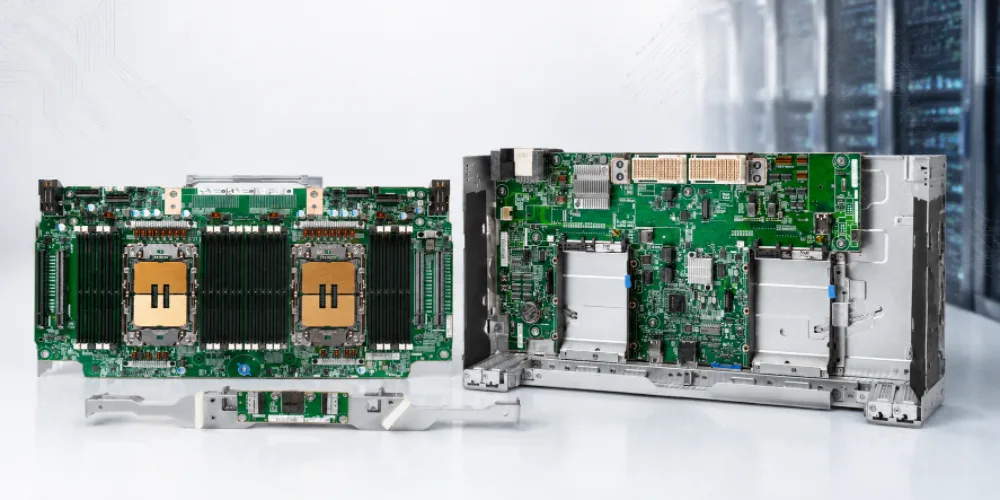
Figure 2. Storage Server PCBA
4. SAS Backplanes, Expanders & Hybrid Drive Chassis Builds
SAS remains the dominant interface in bulk-storage and hybrid-storage chassis where NVMe cost and power consumption is not warranted. SAS-12 (12 Gb/s) and SAS-22.5 (22.5 Gb/s, SAS-4) are current; SAS-3 (12 Gb/s) is ubiquitous in production.
SAS-12 backplane fabrication
- Signaling rate: 12 Gb/s per port.
- Differential impedance: 100Ω ±10% target.
- Material: FR408HR or 370HR for short-trace backplanes; I-Tera MT40 for longer-distance routing.
- Drive support: SATA, SAS, SAS dual-ported all supported on the same backplane.
- Layer count: 8-14 layers typical.
SAS-22.5 (SAS-4) backplane fabrication
- Signaling rate: 22.5 Gb/s per port.
- Material: I-Tera MT40 or FR408HR for longer channels; 370HR may be acceptable for short channels.
- Back drilling: recommended on critical signal vias.
- Volume: emerging in 2024-2025 enterprise storage; ramps through 2026-2027.
SAS expander board fabrication
- Expander chips: Broadcom SAS35x40 (40 ports), SAS35x36 (36 ports), and similar Microchip products.
- Layer count: 10-14 layers depending on port count and routing density.
- Application: 24-bay, 36-bay, 60-bay, 90-bay storage chassis with single expander per zone or distributed multiple-expander designs.
- Reliability: failure of an expander affects all attached drives; high-reliability sourcing for capacitors and connectors.
Hybrid backplane fabrication (SAS + NVMe)
- Architecture: some drive bays support both SAS and NVMe drives via SFF-8639 universal connector.
- Drive identification: backplane and controller detect drive type and route signals appropriately.
- Routing density: both protocols routed to each bay drives layer count higher than single-protocol designs.
- Material selection: NVMe routing requirements dominate material selection for hybrid backplanes.
External SAS / mini-SAS HD cabling boards
- External JBOD chassis: mini-SAS HD (SFF-8644) or SAS-4 active cabling for external drive enclosures.
- Cable board fabrication: small high-frequency boards mounting external connectors with controlled-impedance interface to internal storage controller.
5. HBA, RAID & NVMe Switch Carrier Board Manufacturing
Storage controller logic — host bus adapters, RAID controllers, and NVMe fabric switches — is implemented on dedicated cards or integrated into storage server mainboards. We build both standalone carriers and integrated mainboard designs.
SAS HBA carrier board fabrication
- Common chips: Broadcom MegaRAID, Adaptec SmartRAID, Microchip SmartIOC.
- Form factor: standard PCIe slot card with mini-SAS HD external connectors.
- Layer count: 8-12 layers.
- Material: FR408HR or 370HR.
- Volume: high-volume cards shipped across enterprise storage products.
NVMe HBA / NVMe switch carrier fabrication
- Common chips: Microchip PM8536 SmartIOC, Broadcom NVMe switch fabric, custom hyperscaler NVMe controllers.
- Function: aggregate multiple NVMe drives behind a single host PCIe connection.
- PCIe Gen4/Gen5 routing: controlled impedance, back drilling on critical Gen5 vias.
- Layer count: 10-14 layers.
- Material: I-Tera MT40 typical.
Hardware RAID controller carrier fabrication
- RAID-on-chip (RoC) processors: Broadcom MegaRAID 9xxx series, Adaptec SmartRAID 3xxx series.
- Cache memory: dedicated DDR4 cache on the carrier; cache backup via supercap or BBU.
- Form factor: standard PCIe slot card; some products in OCP NIC form factor.
- Layer count: 10-14 layers with mixed-signal layout.
OCP NIC 3.0 storage card fabrication
- Standardized form factor: OCP NIC 3.0 mezzanine carrier hosting storage controllers, NVMe-oF adapters, or fabric initiators.
- Hot-swap capability: supports hot-swap reconfiguration of storage cards in operating servers.
- Volume in hyperscale designs: increasingly the dominant form factor for hyperscaler storage controllers.
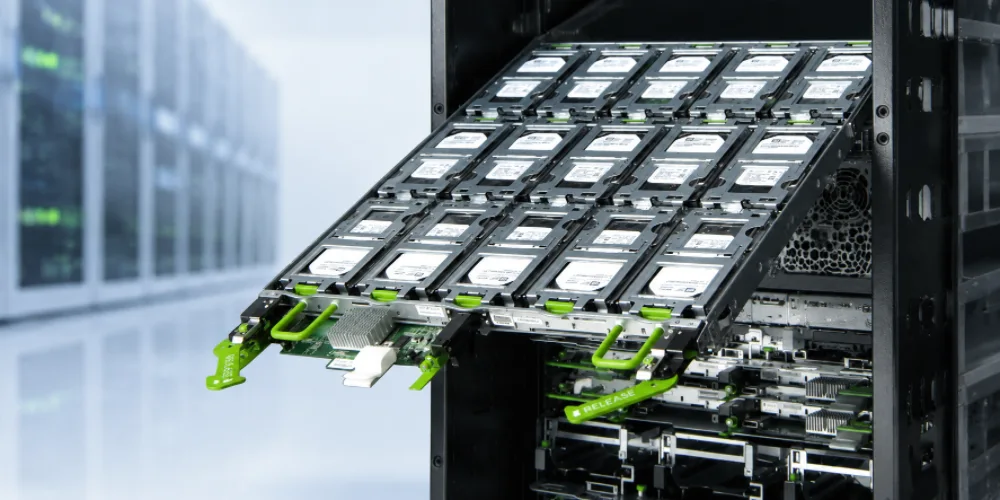
Figure 3. Storage Server PCB Manufacturer
6. NVMe-oF Host & Target Adapter Board Builds
NVMe over Fabrics (NVMe-oF) decouples NVMe storage from the host server, enabling shared storage at near-local-NVMe performance. NVMe-oF target adapters (in JBOFs and storage arrays) and NVMe-oF host adapters (in compute servers) are a growing PCB product line.
NVMe-oF host adapter board fabrication
- Function: initiator-side adapter that presents remote NVMe-oF storage as local NVMe to the host.
- Network interface: 25/100/200/400G Ethernet or InfiniBand.
- Common chips: NVIDIA BlueField DPUs (also serve as NVMe-oF host with offload), Pensando DPU, Marvell Octeon, custom ASICs.
- Layer count: 14-18 layers.
- Material: Tachyon 100G or I-Tera MT40 depending on signaling rate and channel length.
NVMe-oF target adapter board fabrication
- Function: target-side adapter exposing local NVMe drives as NVMe-oF endpoints to the network.
- Architecture: typically integrated into JBOF mainboard or storage array controller.
- Performance optimization: ASIC or FPGA-accelerated target offloads CPU.
RDMA over Converged Ethernet (RoCE) considerations
- RoCE v2 dominance: RoCE v2 is the leading NVMe-oF transport in hyperscaler deployments; some enterprise deployments use FC-NVMe or NVMe/TCP.
- NIC requirements: RDMA-capable NICs at 100G or higher are the host requirement.
- Lossless Ethernet fabric: RoCE v2 requires careful network fabric configuration; OEM storage products often include fabric configuration guidance with their NVMe-oF products.
FC-NVMe (Fibre Channel NVMe-oF) cards
- Use case: existing Fibre Channel SAN environments migrating to NVMe-oF over FC.
- HBA cards: 32G FC and 64G FC HBAs supporting both legacy SCSI/FCP and modern NVMe-oF protocols.
- Production patterns: declining unit volumes vs RoCE-based NVMe-oF, but stable enterprise demand.
7. Engaging Highleap as Your Storage Server PCB Manufacturer
For storage server OEMs, hyperscaler ODMs, and storage controller vendors evaluating PCB manufacturing partners, our engagement model varies by program scope:
Storage server mainboard programs
- Prototype builds: 25-100 piece prototype at 7-10 working day turnaround for 12-18 layer mainboards.
- Qualification samples: 200-1000 pieces with full PPAP-style documentation.
- Pilot production: first volume runs aligned with customer launch readiness.
- Volume production: scheduled deliveries against rolling forecast; capacity reserved against commit.
Backplane programs
- Mechanical first-article verification: CMM measurement confirming connector positioning per SFF spec.
- Electrical first-article verification: TDR impedance verification per controlled-impedance trace.
- Hot-swap reliability sampling: mating cycle testing on representative drive positions.
- Volume scheduling: backplane demand often runs at fixed ratio to drive bay count; forecast-based planning straightforward.
HBA, RAID, and switch carrier programs
- Tight DFM coordination: ASIC vendor reference design typically the starting point; we adapt to customer-specific layout.
- Standard PCIe form factors: reduces tooling and fabrication risk.
- Volume scaling: carrier cards often ship at higher volume than mainboards; capacity allocation prioritized.
Highleap is ISO 9001 and IATF 16949 certified. We manufacture storage server PCBs from 4 layers to 24 layers, with HDI capability for the dense fanout required around large NVMe switch ASICs, controlled impedance to ±5% on Gen5 critical traces, heavy copper to 3-4 oz for power-dense backplanes, and full PCB surface finish coverage (ENIG, immersion silver, OSP, lead-free HASL). Standard quick-turn delivery for storage server prototypes is 5-8 working days for backplanes and 7-10 working days for storage server mainboards.
Submit Gerber files, drill data, stackup specification, target quantities, and program timeline through our online quote portal for a 24-hour response. For complex programs — multi-board family supply for new storage platforms, hyperscaler-specific AVL flows, long-lifecycle sustainment programs — our storage team can engage directly to discuss scope and capacity. For cost-optimized storage backplane builds where Gen4/Gen3 signaling is sufficient, see our FR4 PCB manufacturing capability.

Recommended Posts
TMM4 Filter PCB Manufacturing
TMM4 filter PCB manufacturing is controlled by the...
TMM3 PCB Manufacturing for RF Modules
TMM3 PCB manufacturing is most useful where the RF module...
TMM6 PCB Fabrication
TMM6 fabrication is the process-control page for a mid-Dk...
TMM10 PCB Manufacturing for Compact RF Designs
Table of contentsHow TMM10 Shrinks RF StructuresTMM10 vs...
How to get a quote for PCBs
Let‘s run DFM/DFA analysis for you and get back to you with a report. You can upload your files securely through our website. We require the following information in order to give you a quote:
-
- Gerber, ODB++, or .pcb, spec.
- BOM list if you require assembly
- Quantity
- Turn time
For PCBA services, please provide your BOM (Bill of Materials) and any specific assembly instructions. We also offer DFM/DFA analysis to optimize your designs for manufacturability and assembly, ensuring a smooth production process.