
How To Choose An Isola 370HR PCB Supplier

Selecting an Isola 370HR PCB supplier is fundamentally a cost-transparency problem. When three suppliers quote the same 370HR specification at prices varying by 30–50%, the difference is not efficiency — it is scope. The lowest quote has removed quality steps that the highest quote includes. This guide gives procurement engineers and hardware teams a framework for reading 370HR quotes, understanding what each line item reveals about supplier capability, evaluating material substitution proposals, and calculating the total cost of ownership beyond unit price.
Contents
A complete 370HR quote must include four items at the base price: (1) Isola 370HR specified by name — not “equivalent high-Tg,” (2) TDR data reports per panel, (3) first-article cross-section on new programs, and (4) Isola lot certificate per order. A 20% lower quote that excludes any of these does not reflect supplier efficiency — it reflects removed quality controls.
Quote Line-Item Forensics: Reading What Suppliers Reveal and Conceal
A 370HR PCB quote is a document that reveals supplier capability in what it includes — and supplier limitations in what it omits. Four quote sections require careful reading:
Material Specification Line
What it should say: “Isola 370HR prepreg [specific style, e.g., 2116], core [thickness mm]” — with the prepreg style explicitly named and locked to your design.
Warning signs: “High-Tg FR4 equivalent,” “370HR or equivalent,” or any language that opens a substitution path. On standard FR-4 programs, material flexibility is acceptable. On 370HR programs where thermal reliability and impedance consistency are the reason for specifying the material, any substitution requires explicit written approval.
Impedance Testing Line
What it should say: “TDR impedance testing — 100% per panel — data report included at base price.”
Warning signs: “Impedance controlled” with no deliverable specification. “Certificate of Conformance provided” (a CoC states compliance — it does not provide measured data). Testing listed as a paid add-on. TDR data is a standard deliverable at Highleap Electronics, included in the base price for all controlled-impedance PCB programs.
Electrical Testing Line
What it should say: “100% flying probe electrical test — continuity and isolation.”
Warning signs: “Statistical sampling” for any production volume below 10,000 pieces. For controlled-impedance 370HR multilayer builds, 100% electrical test is the minimum acceptable standard.
IPC Class Specification
What it should say: IPC Class 2 or Class 3 explicitly stated, with acceptance criteria referenced.
Warning signs: No IPC class specified anywhere in the quote. Without an explicit class statement, acceptance criteria default to the supplier’s internal standard — which may be lower than your design requires. See IPC Class 2 vs. Class 3 requirements for the specific differences that affect 370HR board reliability.
| Process Item Included at Full Price | Impact When Removed from Lower Quote |
|---|---|
| TDR data reports, all panels | No impedance consistency tracking; prototype-to-production drift undetectable until field failures |
| First-article cross-section | Plating quality and bond integrity unverified — the primary reliability risk in 370HR builds |
| Validated 370HR press cycle | Potential undercure reduces actual Tg from 180°C to 160–170°C — invisible in the quote, invisible at incoming inspection |
| Isola lot certificate per order | No material traceability — disqualifying for automotive PPAP, medical DHF, and defense programs |
Total Cost of Ownership Beyond Unit Price
The lowest 370HR quote almost never represents the lowest total cost. Four cost categories that appear after the purchase order — and that the low-price supplier’s quote does not mention — frequently exceed the unit price difference:
Hidden Cost 1
Incoming Inspection Labor
A supplier that does not provide TDR data and cross-sections shifts the verification burden to your incoming inspection team. If you do not perform incoming inspection on 370HR boards, the verification gap transfers directly to field failure risk. Either way, the cost exists — the question is whether it appears in the quote or in your quality department’s workload.
Hidden Cost 2
Re-Qualification When Switching Suppliers
If a low-price supplier delivers boards with impedance drift or marginal plating quality, switching to a qualified supplier mid-program requires new first-article verification, TDR baseline establishment, and potentially a PCN (Process Change Notification) to your customer. For automotive programs, a supplier change triggers PPAP re-submission — weeks of documentation and engineering time.
Hidden Cost 3
Field Failure Investigation and Rework
Via barrel cracking from insufficient copper plating appears as intermittent open circuits after thermal cycling in the field. Each field return requires failure analysis, root cause documentation, and corrective action. A single field failure investigation can cost more in engineering time than the entire prototype order saved on unit price.
Hidden Cost 4
Schedule Risk from Material Substitution
A supplier that substitutes prepreg styles without notification causes impedance shifts discovered during system-level testing. The debug time — identifying the root cause as a PCB material change rather than a design error — can consume weeks of schedule. The prototype run must be repeated with the correct prepreg style.
The most cost-effective 370HR supplier is not the lowest unit price — it is the supplier whose quote includes process controls that prevent these downstream costs from occurring. With the documented manufacturing process at Highleap Electronics, TDR data, cross-sections, and material certificates are included at the base price because the cost of providing them is far lower than the cost of the problems they prevent.
Evaluating Domestic Laminate Substitution Proposals
Suppliers — particularly China-based factories — may propose domestic alternatives to Isola 370HR citing 15–25% material cost savings. The two most common proposals are Shengyi S1000-2M and KB-6165F. Whether substitution is acceptable depends entirely on your program requirements.
|
When Substitution May Be Acceptable
|
When Substitution Must Be Rejected
|
Highleap Electronics does not substitute material without written customer approval. For a side-by-side technical comparison of Isola 370HR against domestic alternatives — including Dk/Df at frequency, Tg, Td, Z-axis CTE, and halogen-free compliance data — see our PCB laminate material reference page. For high-frequency designs where insertion loss drives material selection, 370HR vs. low-loss alternatives is a separate engineering discussion — consult our copper clad laminate selection guide for Dk/Df comparison at operating frequency.
Highleap Electronics: Transparent 370HR Supply with Process Controls Included
Highleap Electronics provides competitive Isola 370HR PCB fabrication with all process controls included at the base price:
- 370HR-validated press cycle characterized in-house — not adapted from FR-4 parameters
- TDR data reports and Isola material certificates standard with every shipment — not paid add-ons
- First-article cross-section with IPC-A-600 plating measurements standard on new programs
- Prepreg style locked to the approved first-article specification — no substitution without written customer notification
- ISO 9001:2015 and IATF 16949 certified; PPAP Level 3 documentation for automotive programs
- Direct factory — engineering consultation, process data, and production scheduling without broker intermediaries
- Integrated turnkey PCB assembly and SMT assembly services with 370HR-validated reflow profiles
Compare your current 370HR supplier against Highleap Electronics. Submit Gerbers and stackup — same-day DFM review and competitive quote with engineering notes.
Frequently Asked Questions
Does Highleap Electronics stock 370HR prepreg or order on demand?
Highleap maintains in-house stock of Isola 370HR laminate and prepreg in standard configurations — 1080, 2116, and 7628 prepreg styles in standard core thicknesses. This stock position supports prototype builds without the 3–5 week procurement delay that affects factories ordering material per job. Non-standard configurations may require material procurement — confirm availability at quote stage.
Can a 370HR supplier be audited remotely before committing a program?
Yes. The most effective remote audit is document-based: request a sample TDR data report, cross-section photos with IPC measurements, and the factory’s 370HR press cycle parameters. These three documents reveal process capability more reliably than certification claims or factory tour photographs. Highleap provides all three on request before any commercial commitment.
What is the typical lead time for a 370HR prototype order at Highleap?
For standard in-stock 370HR configurations, Highleap delivers 8–16 layer prototypes in 7–10 business days including first-article cross-section and TDR data report. Rush service at 5–7 business days is available where in-stock material and queue priority are confirmed at quote stage. High-layer-count builds (18–24+ layers) require 10–18 days depending on lamination complexity.

Recommended Posts
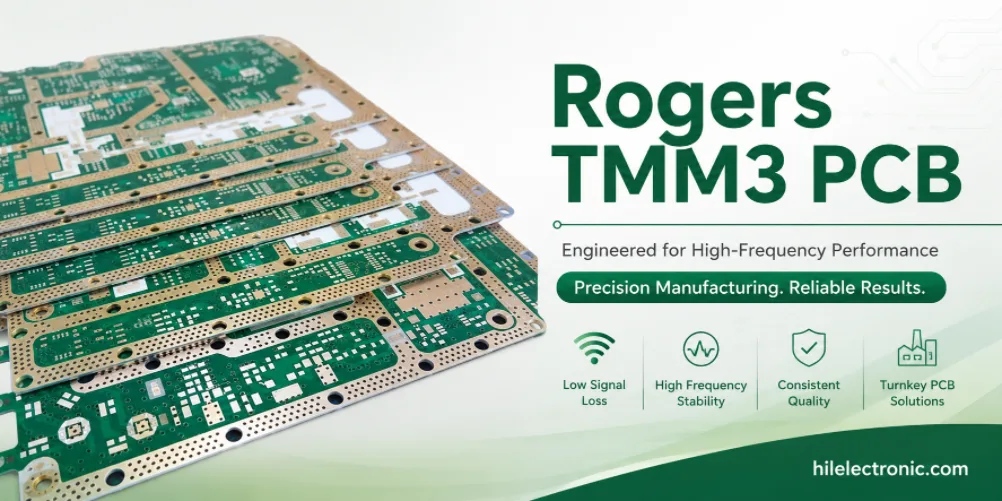
TMM3 PCB Manufacturing for RF Modules
TMM3 PCB manufacturing is most useful where the RF module...
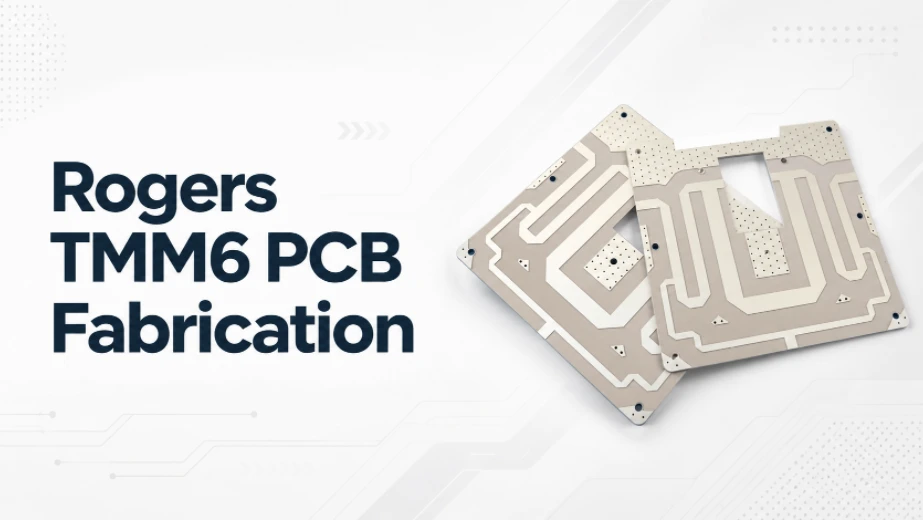
TMM6 PCB Fabrication
TMM6 fabrication is the process-control page for a mid-Dk...
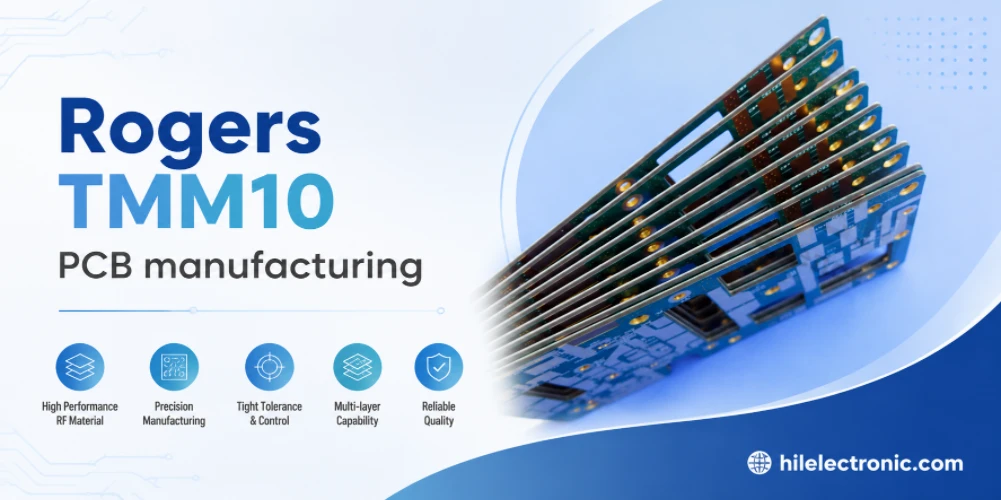
TMM10 PCB Manufacturing for Compact RF Designs
Table of contentsHow TMM10 Shrinks RF StructuresTMM10 vs...

TMM10i PCB Fabrication and DFM
TMM10i PCB fabrication has a stronger DFM emphasis because...
How to get a quote for PCBs
Let us run DFM/DFA analysis for you and get back to you with a report.
You can upload your files securely through our website.
We require the following information in order to give you a quote:
-
- Gerber, ODB++, or .pcb, spec.
- BOM list if you require assembly
- Quantity
- Turn time