
AC-DC Power Supply PCB Cost Guide
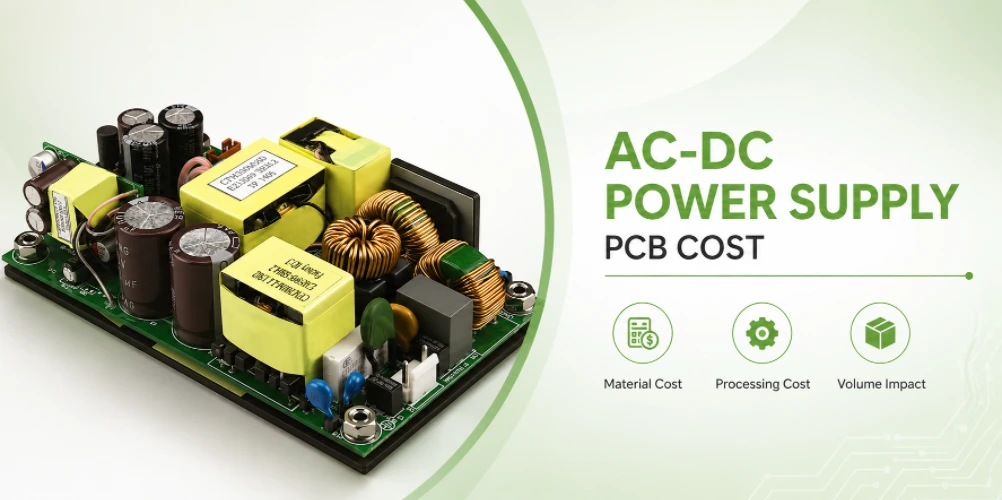
Figure 1. AC-DC power supply PCB cost
The cost of an AC-DC power supply PCB is dominated by three things — the bill of materials (especially the magnetics, bulk capacitors and controller), the fabrication choices (copper weight, layer count, material grade), and the testing required (Hipot and functional test on every unit) — with volume setting how the one-time engineering and tooling spread across the order. Unlike a logic board where bare-PCB cost leads, a power supply’s cost usually lives in the components and the test time. Highleap helps customers reach a realistic cost target by reviewing where the money actually goes and identifying the changes that reduce it without weakening the board.
Working to a cost target on a power board? Send your design and volume and we will show you where the cost sits and how to reduce it. Get a cost breakdown.
What Actually Drives the Cost of a Power PCB
To control the cost of a power supply you first have to know where it lives, and the answer surprises buyers who come from digital electronics. On a logic board the bare PCB is often the dominant cost; on a power supply, the components frequently outweigh everything else, because a transformer, a bank of high-voltage electrolytic capacitors and a specialized controller are expensive parts. The fabrication itself — heavier copper, more layers, better material — adds real cost too, and testing is a genuine line item because high-voltage verification takes time. Knowing this stops you optimizing the wrong thing: shaving the bare-board cost while ignoring a BOM that dwarfs it.
Each driver responds to different levers, which is why a cost conversation has to address them separately. Fabrication cost moves with copper weight, layer count, board size and material grade. Component cost moves with part selection, sourcing and volume. Test cost moves with coverage and fixturing. Treating “the cost” as one undifferentiated number leads to frustration; treating it as a set of drivers, each with its own lever, is what lets you actually move the total.
The Main Cost Drivers
| Driver | Cost Impact | The Lever |
|---|---|---|
| Components (BOM) | Often the largest single element | Part selection, sourcing, volume pricing. |
| Copper weight | Heavier copper costs more to process | Use heavy copper only where current needs it. |
| Layer count | Each layer pair adds fabrication cost | Right-size the stackup to the topology. |
| Material grade | High-Tg and metal-core cost more | Match grade to thermal/reliability need. |
| Testing | Per-unit Hipot/functional test time | Right-size coverage to safety need. |
| One-time setup | Engineering, tooling, fixtures | Amortize across volume. |
The practical lesson is to attack cost where it actually sits. For most power supplies that means the BOM first, fabrication choices second and one-time costs through volume third — not the other way around, which is where buyers who treat the bare board as the main cost end up wasting effort.
How Cost Falls With Volume
Volume changes power-supply economics more than almost any other factor, and not in a straight line. The one-time costs — engineering, tooling, stencils, fixtures — are fixed regardless of quantity, so at low volume they dominate the per-unit price and at high volume they nearly vanish into it. On top of that, component pricing improves with quantity as the manufacturer’s purchasing moves into better price breaks on the magnetics and semiconductors, and assembly becomes more efficient as setup time spreads across more boards. The result is a per-unit cost curve that drops steeply at first and then flattens.
Understanding the shape of that curve is what lets you plan intelligently. A prototype or pilot quantity will always look expensive per unit because the fixed costs have nowhere to hide; that is normal, not a sign of a bad quote. The meaningful number is the per-unit cost at your real production volume, and the meaningful question is where on the curve your volume sits — because moving from, say, hundreds to thousands often unlocks a price break that changes the product’s whole business case.
How Cost Behaves Across Volume Tiers
| Volume Tier | What Dominates Per-Unit Cost | Cost Behavior |
|---|---|---|
| Prototype | One-time engineering and setup | Highest per unit; expected and normal. |
| Pilot | Setup still significant, parts improving | Falling but not yet flat. |
| Low volume | Components and assembly | Setup mostly amortized; component price breaks begin. |
| Production volume | Components and efficient assembly | Lowest per unit; curve flattens. |
So the right cost question is never “what does one board cost” in isolation — it is “what does a board cost at the volume I will actually run.” Quoting your real production quantity, and asking where the next price break sits, is how you turn the volume curve to your advantage instead of being surprised by it.
The BOM Is Where the Money Is
Because components so often dominate power-supply cost, the bill of materials is the highest-leverage place to work — and the magnetics and the controller are usually the headline items. A custom transformer carries tooling and per-unit cost; a sole-sourced controller carries price and risk; high-voltage electrolytic capacitors add up across a design. Trimming a few cents off a resistor changes nothing, but a smarter magnetic choice or a controller with a qualified second source can move both the cost and the supply risk meaningfully.
The most effective BOM cost work is also the least glamorous: consolidating part numbers so the same component does more jobs, qualifying alternates so you are not hostage to one supplier’s price, choosing standard magnetics over custom where performance allows, and timing buys to volume price breaks. None of this compromises the board — it is pure efficiency. A manufacturer that knows the power-component market can often suggest substitutions that hold performance while reducing cost or risk, which is a conversation worth having before the BOM is locked.
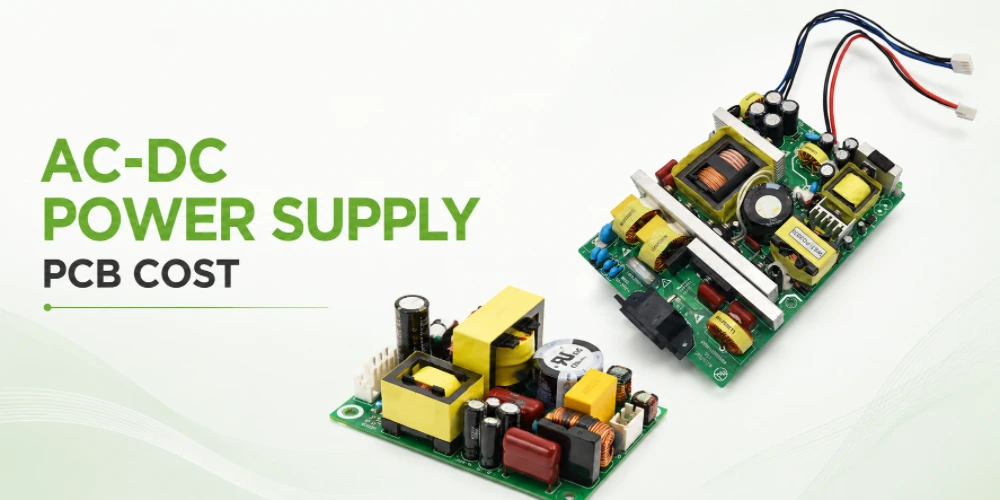
Figure 2. AC-DC power supply PCB cost control
Where You Can Cut Cost Without Cutting Corners
There is a clean line between cost reduction and corner-cutting, and staying on the right side of it is the whole art. Legitimate cost reduction removes waste — copper heavier than the current requires, layers the topology does not need, material grade beyond the thermal reality, custom parts where standard ones perform, panel layouts that waste board area. Each of these lowers cost while leaving the board’s safety, performance and reliability untouched, because you were paying for capability you did not use.
The moves below are the ones that reliably reduce a power-supply’s cost without weakening it. The common thread is that they right-size the design to its actual requirements rather than removing margin the board genuinely needs — which is exactly the distinction that separates them from the false economies in the next section.
- Right-size copper: use heavy copper only on the high-current paths, not the whole board.
- Right-size the stackup: drop layers the topology and EMI plan do not require.
- Match material to need: use high-Tg or metal-core only where thermal life demands it.
- Standardize parts: prefer standard magnetics and consolidate part numbers where performance allows.
- Optimize panelization: improve board-per-panel yield to cut fabrication and assembly cost.
- Buy to volume: time component purchases to hit price breaks at your real quantity.
Done together, these can take real cost out of a power board while it still passes every test it did before. The key is that each one removes excess, not margin — which is why they are safe to pursue and the cuts in the next section are not.
False Economies That Cost More Later
Some “savings” are traps, and on a power board they are expensive ones because the failure mode is a board that ships and then fails. Under-specifying copper to save fabrication cost produces a supply that runs hot and ages early. Skipping 100% Hipot in favor of sample testing saves test time but ships boards whose isolation barrier was never individually proven. Choosing the cheapest unqualified component can save cents per unit until that part goes end-of-life or arrives counterfeit and stalls your line. Each of these lowers the quote and raises the true cost.
The reason these are worth naming is that they are tempting precisely because they work — right up until they do not. A power supply that passes on the bench but fails in a hot enclosure, or a batch that fails safety testing at the customer, costs far more than the fabrication or test money saved, in returns, rework and reputation. Real cost optimization removes waste; false economy removes the margin and verification that keep a mains board safe and reliable. Knowing the difference is what protects both your budget and your product.
How Highleap Helps You Hit Your Cost Target
Highleap Electronics approaches cost the way the drivers above suggest — by showing you where the money actually sits and which changes reduce it without weakening the board. When you send a design and a target volume, we break down the cost into its real components, flag where the BOM is carrying expense or risk, identify copper, layer and material choices that exceed what the board needs, and quote against your true production quantity rather than a prototype number. Where we see a safe substitution or a right-sizing opportunity, we raise it; where a cut would compromise safety or reliability, we say so plainly.
Because we fabricate, assemble and test in one place, we can optimize across the whole job rather than within one silo — trading a fabrication choice against a component choice against test scope to land your real target. The goal is a board that meets your cost number and still passes every test and survives its rated life, not a cheaper quote that becomes more expensive in the field. Send us your design and volume and we will show you, line by line, where your cost lives and how to move it.
Have a cost target to hit on a power supply? Send your design and volume for a real cost breakdown and reduction ideas. Get a cost breakdown.
Cost control is easier when you separate PCB assembly cost, heavy copper power-supply fabrication, PCB assembly lead time, electrical testing, functional testing, and PCB manufacturing process planning.

Recommended Posts

Taconic RF-35 PCB Manufacturing Service — Prototype Through Volume Production
Figure 1. Taconic RF-35 PCBTaconic RF-35 is the workhorse...

Isola Astra MT77 PCB Manufacturing
Figure 1. Isola Astra MT77 PCB ManufacturingIsola Astra...

Custom Rogers RO4835 PCB Fabrication & Assembly Services
Figure 1. Rogers RO4835 PCBRogers RO4835 PCB is a...

Nelco N4000-13 PCB Material and Manufacturing Guide | Highleap Electronics
Figure 1. Nelco N4000-13 PCBNelco N4000-13 PCB is a...
How to get a quote for PCBs
Let‘s run DFM/DFA analysis for you and get back to you with a report. You can upload your files securely through our website. We require the following information in order to give you a quote:
-
- Gerber, ODB++, or .pcb, spec.
- BOM list if you require assembly
- Quantity
- Turn time
For PCBA services, please provide your BOM (Bill of Materials) and any specific assembly instructions. We also offer DFM/DFA analysis to optimize your designs for manufacturability and assembly, ensuring a smooth production process.