
Enterprise SAN PCB Fabrication Services

Figure 1. SAN PCB
Highleap Electronics fabricates SAN PCBs for enterprise block-storage OEMs and storage area network hardware vendors — including dual-controller storage array mainboards (active/active architectures with cache-coherent inter-controller interconnect, battery-backed or NVDIMM-N cache support, hot-swap controller pair design), Fibre Channel HBA carriers (16G/32G/64G FC at 28 Gbps NRZ signaling), iSCSI HBA carriers with TCP/IP offload, FC-NVMe host and target adapters, SAN switch line cards (Brocade Gen7-class, Cisco MDS-class FC director switch fabric and port-side blades), and storage backplanes for hybrid SAS+NVMe and all-NVMe flash arrays. Boards built to IPC-A-600 Class 3 acceptance, certified to IATF 16949 quality system, with AS9100D-aligned process flow available for storage hardware serving defense, government, and critical-infrastructure markets. Programs supported for Tier-1 enterprise storage OEMs including NetApp, Pure Storage, Dell EMC, HPE Nimble, IBM FlashSystem, Hitachi Vantara, Infinidat, and equivalent enterprise block-storage vendors.
Table of Contents
- SAN Hardware PCBs vs NAS and General Storage Server PCBs
- Dual-Controller Storage Array Mainboard Fabrication
- Fibre Channel HBA, FC-NVMe & iSCSI Host Adapter Builds
- SAN Switch Line Card & Director-Class Fabric Board Fabrication
- Engaging Highleap on Your SAN Hardware Program
1. SAN Hardware PCBs vs NAS and General Storage Server PCBs
SAN (Storage Area Network) hardware is a distinct product category from NAS and general storage servers, and the PCB requirements reflect that distinction. SAN provides block-level storage over a dedicated network — historically Fibre Channel, increasingly with IP and NVMe-over-Fabrics alternatives — to host servers that mount the storage as if it were local. SAN customers are predominantly large enterprises running mission-critical databases, virtualization clusters, and high-transaction applications. The unit-volume, customer expectation, and engineering rigor profile is at the top end of our server PCB manufacturing portfolio.
Architectural and PCB differences from NAS
- Protocol layer: SAN serves block I/O (SCSI commands over FC or iSCSI or NVMe-oF); NAS serves file I/O (NFS, SMB). PCB-level, SAN hardware requires high-speed network interfaces specifically tuned for storage protocols, not general-purpose Ethernet.
- Controller architecture: SAN storage arrays are almost universally dual-controller active/active with cache mirroring and synchronous failover; consumer NAS is single-controller; only enterprise filer NAS approaches SAN-class controller architecture.
- Network connectivity: SAN uses dedicated Fibre Channel SAN, dedicated iSCSI SAN, or NVMe-oF over RoCE; carrier boards specifically designed for these protocols rather than general-purpose Ethernet NICs.
- Performance target: SAN platforms target millisecond-class latency on enterprise workloads under sustained load; PCB design must support this without margin loss to signal-integrity or power-delivery issues.
Customer base and program characteristics
- Tier-1 enterprise storage OEMs: NetApp, Pure Storage, Dell EMC (PowerMax, PowerStore high-end), HPE (Primera, Alletra), IBM (FlashSystem, DS series), Hitachi Vantara (VSP), Infinidat.
- Volume profile: tens of thousands of units per platform per year on top products; lower than NAS but higher unit value.
- Product lifecycle: 5-7 years in market with 7-10 years sustainment beyond EOP.
- Customer engagement: formal AVL flows, often spanning 9-18 months from initial introduction to first production order; long-term partnership investment justified.
Quality and certification requirements
- IPC Class 3 standard: enterprise SAN hardware almost universally specifies Class 3 acceptance for controller boards.
- Environmental qualification: thermal cycling, humidity, vibration testing typically required for AVL approval.
- Long-life material qualification: 7+ year service-life expectations drive specific material selection and validation.
- Documentation depth: CoC, mill certs, electrical test, impedance, S-parameter, microsection, AOI, visual inspection, traceability log per delivery.
- Government and regulated industry support: some SAN deployments serve defense, government, healthcare, financial services with additional regulatory documentation needs.
2. Dual-Controller Storage Array Mainboard Fabrication
The dual-controller storage array mainboard is the centerpiece of every enterprise SAN platform. Two complete storage controllers in a single chassis share access to the drive backplane, mirror their write caches, and provide failover service if one controller fails. The PCB design and fabrication for these mainboards involves several requirements unique to enterprise SAN.
Architecture variants
- Side-by-side controllers in a single chassis: two complete controller PCBs side-by-side, sharing midplane to drive backplane and front I/O.
- Stacked controllers: some compact 2U arrays stack controllers vertically to fit drive bays and controllers in the same chassis depth.
- Front-loaded controllers: some arrays front-load controllers as hot-swap canisters, with drive backplane in the rear.
- Per-controller PCB: typically one mainboard PCB per controller, with a separate midplane PCB carrying signals between controllers and to the drive backplane.
Cache coherency interconnect fabrication
- Function: the two controllers must maintain coherent write cache so a failover doesn’t lose acknowledged writes. The interconnect between them carries cache mirroring traffic continuously.
- Common implementations: PCIe Gen4/Gen5 Non-Transparent Bridge (NTB), proprietary point-to-point fabrics, NVLink-over-cable in some designs.
- Signal-integrity requirements: impedance ±5% on differential pairs, back drilling on critical signal vias, controlled-impedance launches at the midplane connector — full high-speed PCB manufacturing discipline applied to inter-controller and FC fabric layers.
- Bandwidth: 100+ GB/s per controller link is increasingly typical on all-NVMe enterprise arrays.
- Material: Tachyon 100G or Megtron 7 on the inter-controller link layers; mid-loss elsewhere.
Battery-backed cache (BBU) integration
- Function: on AC power loss, BBU sustains DRAM cache long enough to dump to NAND backing store; protects acknowledged writes from data loss.
- BBU connector: precision mating connector accepting lithium-ion battery pack; charge control circuit on mainboard.
- Power management: dedicated standby rail; automatic switchover on AC loss; managed by hardware logic (not OS) for reliability.
- Health monitoring: capacity test cycles, temperature monitoring, end-of-life prediction.
NVDIMM-N cache support
- Newer architecture: NVDIMM-N modules combine DRAM with onboard NAND backing store and supercapacitor for power-loss protection.
- Mainboard support: standard DDR4/DDR5 DIMM slots compatible with NVDIMM-N modules; additional save/restore signaling.
- Supercap charge management: charge-monitoring circuit verifies adequate energy for restore operation.
- Material: standard DDR routing material (FR408HR or I-Tera MT40 for DDR5 high-rate).
Hot-swap controller pair design
- Controller insertion/removal under power: failed controller pulled while partner controller serves data.
- Blind-mate connector: high-density signal + power connector with controlled-impedance signal launches.
- Power sequencing: hot-swap controller IC manages safe insertion power-up and removal power-down.
- Pre-charge resistor: limits inrush current on capacitor banks during insertion.
- Connector position tolerance: ±0.10 mm positional tolerance for reliable blind-mate.
Layer count and material profile
- Layer count: 16-24 layers typical for dual-controller mainboards depending on inter-controller fabric complexity, built on our multilayer PCB manufacturing line.
- Material strategy: hybrid stackup with Tachyon 100G or Megtron 7 on inter-controller and high-speed PCIe/network layers; FR408HR on DDR routing; 370HR on power and ground.
- Heavy copper: 2-3 oz on power layers; 1 oz signal layers standard.
- Surface finish: ENIG standard for enterprise SAN reliability.
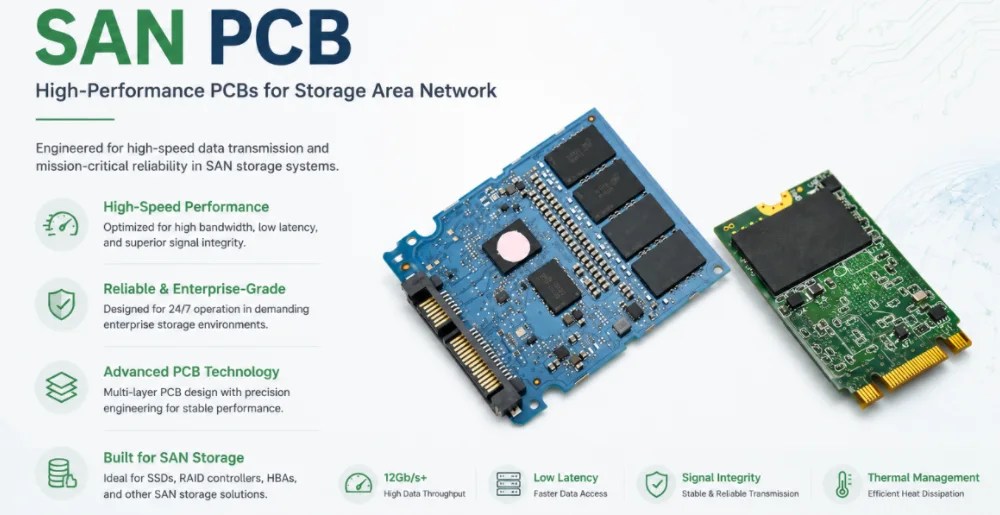
Figure 2. SAN PCB
3. Fibre Channel HBA, FC-NVMe & iSCSI Host Adapter Builds
SAN protocol adapters are core peripheral products to any SAN platform. Whether built as add-in cards for host servers, integrated into SAN array I/O modules, or implemented as switch port-side adapters, FC HBAs and their iSCSI/NVMe-oF cousins are a major PCB product category.
16G/32G Fibre Channel HBA carrier fabrication
- Common chips: Broadcom Emulex Gen6 (16G) and Gen7 (32G); Marvell QLogic 269x (32G) and earlier 16G; Brocade ASICs for embedded SAN switch products.
- Form factor: standard PCIe slot card (low-profile or full-height); some products in OCP NIC 3.0 form factor.
- PCIe host interface: PCIe Gen3 ×8 for 16G FC; PCIe Gen4 ×8 for 32G FC.
- FC signaling: 14.025 Gbps NRZ for 16G FC; 28.05 Gbps NRZ for 32G FC.
- Layer count: 8-12 layers.
- Material: 370HR or FR408HR for 16G; I-Tera MT40 or FR408HR for 32G.
64G Fibre Channel (Gen7+) HBA carrier fabrication
- Signaling rate: 28.05 Gbps PAM4; doubled effective rate vs 32G NRZ at same baud.
- Common chips: Broadcom Emulex Gen7 (64G); Marvell QLogic Gen7.
- PCIe host interface: PCIe Gen4 ×8 or Gen5 ×8 depending on chip.
- Material: I-Tera MT40 or Tachyon 100G depending on trace length to SFP+ cage.
- Back drilling: recommended on critical signal vias — see our back-drilling technology page for stub-control tolerance bands across 32G and 64G FC builds.
- Layer count: 10-14 layers.
FC-NVMe host adapter fabrication
- Protocol: NVMe-over-Fibre-Channel; modernizes FC for NVMe storage performance.
- Backward compatibility: same HBA chips often support both legacy SCSI/FCP and modern FC-NVMe protocols.
- Migration path: enterprise customers with FC infrastructure investment migrate to NVMe storage without forklifting the SAN fabric.
- PCB fabrication: same as Fibre Channel HBA at the same speed grade; no PCB-level distinction.
iSCSI HBA carrier fabrication
- Protocol: SCSI commands over TCP/IP; runs on standard Ethernet rather than FC.
- HBA acceleration: iSCSI HBAs offload TCP/IP and iSCSI protocol processing from host CPU.
- Common chips: declining market — many SAN customers use software iSCSI initiators on standard NICs.
- Form factor: standard PCIe slot card; some embedded variants in storage array I/O modules.
- Network interface: 10/25/100 GbE typical.
RoCE-NVMe-oF host adapter fabrication
- Protocol: NVMe over RoCE v2 (RDMA over Converged Ethernet).
- Modern alternative to FC-NVMe: uses standard Ethernet infrastructure with lossless fabric configuration.
- Common chips: NVIDIA ConnectX-6/7 with NVMe-oF offload, BlueField DPUs.
- PCB fabrication: follows high-speed NIC carrier practice; I-Tera MT40 or Tachyon 100G material.
Storage array I/O module fabrication
- Hot-swap I/O modules: SAN arrays often present I/O ports through hot-swap modules — each module carrying 4-8 FC ports or equivalent network connectivity.
- Module PCB: compact PCB with FC HBA chip(s) and SFP+ cages; mates to array I/O backplane via blind-mate connector.
- Layer count: 8-12 layers.
- Volume: ships at fixed ratio per array (typically 2 I/O modules per controller × 2 controllers per array).
4. SAN Switch Line Card & Director-Class Fabric Board Fabrication
SAN fabric — the network connecting hosts to storage — is built from FC switches at the edge and FC director-class switches at the core. Director-class chassis switches host multiple line cards with port-side blades and switch-fabric blades. PCB fabrication for these line cards involves some of the most demanding routing and signal-integrity work in the SAN hardware portfolio.
Edge FC switch line card fabrication
- Common products: Brocade Gen6 and Gen7 fixed-port switches; Cisco MDS 9100-series; HPE StoreFabric.
- Port density: 24-96 FC ports per switch in fixed configuration.
- Switch ASIC: Brocade Condor (Gen6) and Iceberg/Janus (Gen7); Cisco custom ASICs.
- Layer count: 14-20 layers depending on port density.
- Material: I-Tera MT40 or FR408HR for Gen6 (32G); Tachyon 100G for Gen7 (64G).
Director-class line card fabrication (port-side blade)
- Common products: Brocade X7 director, Cisco MDS 9700 series.
- Port density: 16-64 FC ports per blade.
- Layer count: 18-26 layers on Gen7 director blades.
- Material: Tachyon 100G on signal layers.
- Mid-plane interface: high-density blind-mate connector mating blade to director chassis mid-plane.
- Power delivery: blade hot-swap support with controlled inrush current.
Director-class fabric blade fabrication
- Function: central switching fabric in director chassis; aggregates traffic from multiple port-side blades.
- Switch ASIC: large switch fabric ASIC with hundreds of high-speed lanes.
- Layer count: 24-30 layers typical.
- Routing density: highest in any SAN PCB; fabric blade is fully populated with high-speed traces.
- Material: Tachyon 100G or Megtron 7 throughout signal layers.
- Cooling integration: high-power switch ASIC requires careful thermal-via design and heat-spreader copper.
Director chassis mid-plane fabrication
- Function: connects all blades within the director chassis; carries inter-blade traffic plus management.
- Form factor: very large PCB (often 500+ mm in longest dimension).
- Layer count: 24-32 layers due to interconnect density.
- Material: Tachyon 100G typical.
- Mechanical: precision mounting and connector positioning to support reliable blind-mate over thousands of insertion cycles.
FC SFP+ and SFP-DD module host fabrication
- SFP+ cages: 16G/32G FC modules; standard SFP+ host-side electrical interface.
- SFP-DD (double-density): 64G FC modules with PAM4 signaling.
- Host-side fabrication: compensated SI launches at the cage footprint; controlled-impedance differential pairs to switch ASIC.
- Material: Tachyon 100G for 64G FC; I-Tera MT40 for 32G FC.
5. Engaging Highleap on Your SAN Hardware Program
For enterprise SAN OEMs evaluating PCB fabrication partners, the engagement model reflects the multi-year program commitment and rigorous AVL flows characteristic of enterprise storage:
Initial engagement
- NDA and confidential exchange: CDA execution to enable detailed design discussion under enterprise OEM IP-protection requirements.
- Capability statement: formal documentation of our SAN hardware fabrication capability, certifications, references, and capacity commitments.
- Sample build on a representative reference design: 25-100 piece sample build covering one or more board types from the customer’s portfolio.
Qualification flow
- Site audit: customer quality team site visit; review of equipment, process, documentation, environmental controls.
- Process validation: SPC data, control plans, FMEA documentation reviewed by customer engineering and quality.
- First article qualification builds: 50-500 piece samples with full documentation package including S-parameter test reports.
- Customer-side validation: environmental qualification, thermal cycling, system-level functional and stress testing.
- Formal AVL approval: cross-functional engineering, quality, manufacturing, and procurement sign-off.
Production engagement
- Capacity reservation: firm capacity allocation against rolling 12-18 month forecast; supports SAN platform demand spikes.
- Multi-board family supply: coordinated supply of mainboards, HBA carriers, switch line cards, backplanes, and accessory boards under unified change control.
- Quality reporting: monthly scorecard tracking PPM, on-time delivery, response time, open issues; quarterly business review.
- Long-life sustainment: 7-10 year spare-parts production commitment beyond EOP; documented EOL planning and material substitutability paths.
- Change control discipline: formal ECN management with cut-in scheduling; supplier-initiated PCN with 90-180 day advance notice.
Highleap is ISO 9001 and IATF 16949 certified, with AS9100D-aligned process flow available for SAN programs serving defense, government, financial, or other regulated markets. We manufacture SAN hardware PCBs from 8 layers (simple HBA carriers) to 32+ layers (director-class fabric blades), with HDI solutions including sequential lamination, controlled impedance to ±5% on critical traces, back drilling to ±5 mil residual stub tolerance, heavy copper to 4 oz on power layers, and full surface finish coverage (ENIG, immersion silver, lead-free HASL). Our high-speed digital line uses laser direct imaging at 25 µm resolution and supports 28 Gbps NRZ (32G FC) and 28 Gbps PAM4 (64G FC) routing on Tachyon 100G and Megtron 7 ultra-low-loss laminates with full S-parameter characterization to 40 GHz on test coupons delivered with each panel.
Submit Gerber files, drill data, stackup specification, channel performance targets, target quantities, and program timeline through our online quote portal for a 24-hour response covering DFM feedback, material recommendation, impedance verification, and pricing. For complex SAN programs — multi-board family supply, director-class chassis builds, hyperscaler-specific qualification flows, multi-year sustainment programs — our SAN hardware team can engage directly to discuss scope, qualification timeline, and capacity commitments.

Recommended Posts
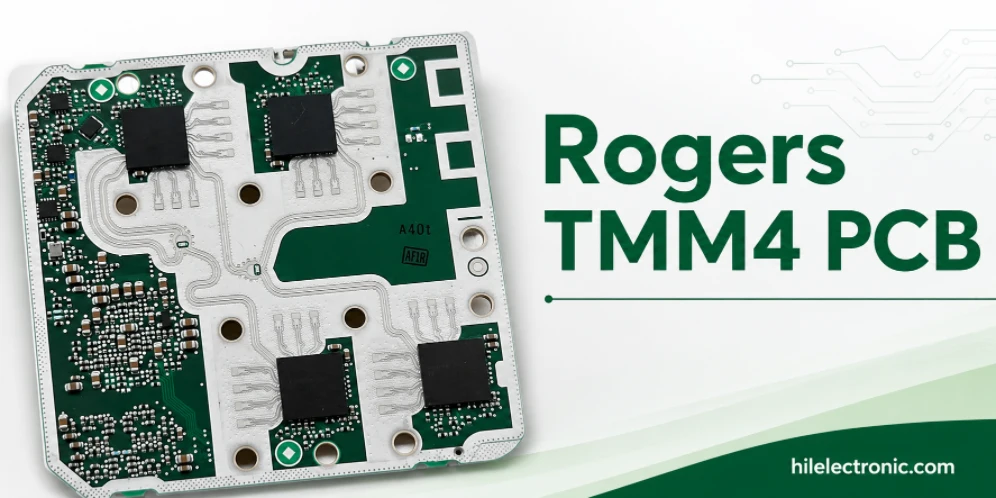
TMM4 Filter PCB Manufacturing
TMM4 filter PCB manufacturing is controlled by the...
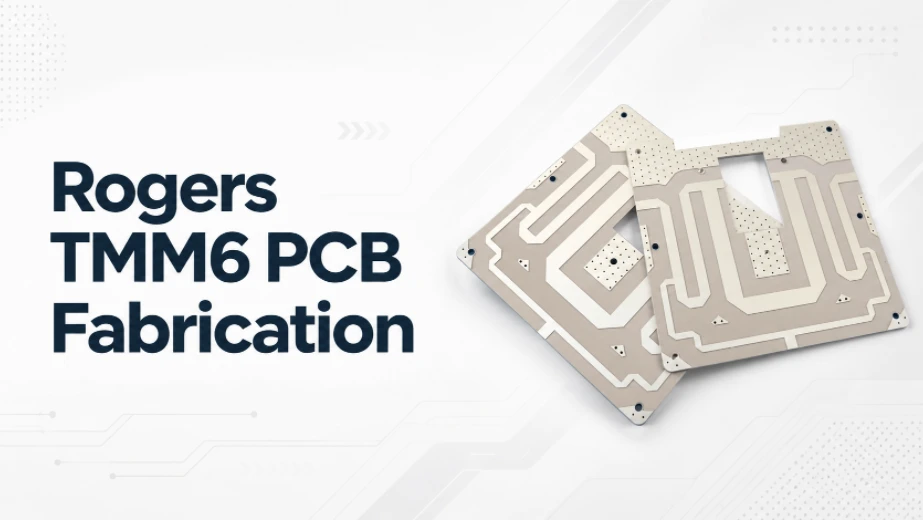
TMM6 PCB Fabrication
TMM6 fabrication is the process-control page for a mid-Dk...
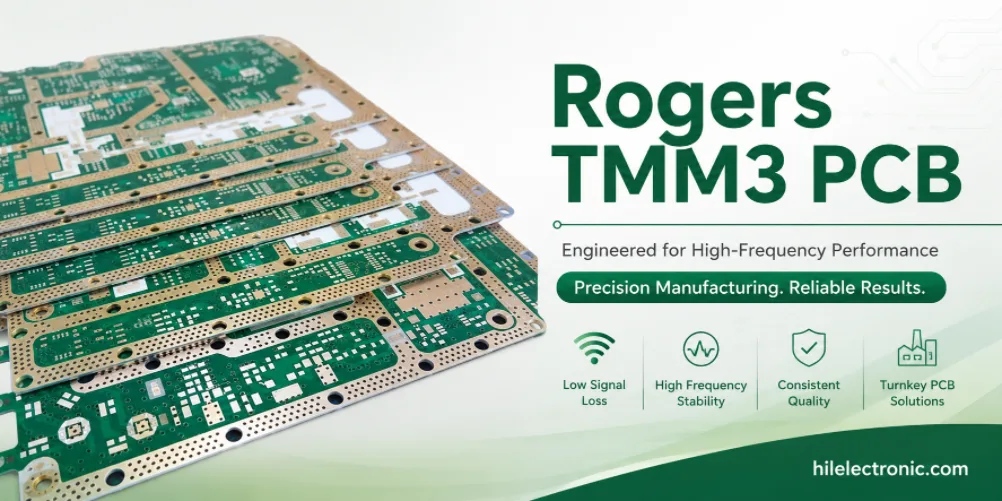
TMM3 PCB Manufacturing for RF Modules
TMM3 PCB manufacturing is most useful where the RF module...
TMM10 PCB Manufacturing for Compact RF Designs
Table of contentsHow TMM10 Shrinks RF StructuresTMM10 vs...
How to get a quote for PCBs
Let‘s run DFM/DFA analysis for you and get back to you with a report. You can upload your files securely through our website. We require the following information in order to give you a quote:
-
- Gerber, ODB++, or .pcb, spec.
- BOM list if you require assembly
- Quantity
- Turn time
For PCBA services, please provide your BOM (Bill of Materials) and any specific assembly instructions. We also offer DFM/DFA analysis to optimize your designs for manufacturability and assembly, ensuring a smooth production process.