
PCB Laminate Lead Time and Production Scheduling

In a normal market, “lead time” describes how long a fabricator’s queue is. In 2026 it describes something different: how long it takes to secure the laminate your board is built on. Fabrication of a controlled-impedance board now starts only after the correct copper-clad laminate (CCL) grade is allocated to the order — and that grade is allocated only after the resin, copper foil, and glass cloth needed to build it are confirmed. This shift, from a fabrication-limited schedule to a material-limited one, is the most important change a production planner needs to understand. This guide explains why laminate lead times vary so widely, how they scale with board complexity, and how to plan a schedule that does not stall waiting for material.
Why Laminate Lead Times Vary
Laminate lead time is not a single number; it varies by grade because each grade depends on a different set of upstream inputs, and those inputs are not equally available. A standard FR-4 laminate uses widely produced epoxy resin, common glass cloth, and standard electrodeposited copper foil — inputs that, while tighter than a year ago, are not in genuine crisis. A low-loss laminate uses a PPO/PPE-based resin system, finer or lower-Dk glass cloth, and a low-profile copper foil — each of which is more specialized and more constrained. As the grade climbs toward M8 and M9, the glass cloth becomes high-purity quartz (Q-glass) and the foil becomes ultra-low-profile HVLP, both of which sit in extremely concentrated supply.
The result is that lead time tracks how scarce the rarest input is. Because fabrication cannot begin until the full set of inputs for the specified grade is confirmed, a single constrained input — say, HVLP copper foil — sets the whole board’s clock. This is why two boards from the same fabricator can have radically different lead times based purely on their laminate specification. The underlying supply mechanics are covered in the PCB material shortage Hub and the upstream CCL shortage analysis.
Standard vs Specialty Laminate Availability
The gap between standard and specialty laminate availability in 2026 is large. Standard FR-4 has moved from a historical 2–3 weeks to roughly 6–8 weeks — meaningfully tighter, but still plannable. The reason FR-4 has slipped at all is allocation spillover: as CCL makers prioritize high-margin AI material, capacity for standard grades shrinks even though FR-4’s own raw materials are not in crisis. Some standard-grade lead times from major laminators have moved from a few days to around four weeks for this reason.
Specialty grades tell a sharper story. M6/M7 low-loss laminates have stretched from 4–6 weeks to roughly 14–18 weeks, with some advanced grades quoted as long as 140 days. M8/M9 Q-glass grades are frequently allocation-only at 20+ weeks, and some grades sit on a six-month quota system in which a PCB maker must take delivery strictly in line with documented usage. Epoxy-resin lead times for some systems have moved from around 3 weeks to 15 weeks. The single most constrained items are HVLP copper foil and high-purity quartz glass cloth, where the industry projects multi-thousand-tonne shortfalls. For the material-by-material picture, see the dedicated guides on copper foil shortage, glass fiber cloth shortage, and prepreg material for multilayer PCB.
Layer Count Impact on Material Lead Time
Layer count compounds the lead-time problem in two ways. First, a higher layer count usually means a higher-performance laminate grade — high-layer-count AI boards typically use mid-loss or low-loss material precisely because they carry high-rate signals — so the board inherits the longer lead time of the more constrained grade. Second, each layer consumes material; an 18-layer board needs far more laminate and prepreg per panel than a 4-layer board, which makes the allocation requirement larger and therefore harder to fill quickly from a constrained supply.
High-layer-count boards also require more lamination cycles and tighter registration, which means the material quality and consistency requirements are stricter. The combination — scarcer grade, larger quantity, tighter quality — is why high-layer-count programs feel the laminate shortage most acutely. The design-side guidance is in our high layer count PCB materials guide, with stack-up specifics in the HDI stack-up design guide.

Material Delays and PCB Assembly Scheduling
A laminate delay does not stay contained to fabrication — it ripples into assembly scheduling. If bare boards arrive late, the SMT line slot reserved for the build goes unused or has to be rebooked, components ordered against the original schedule may sit in inventory or expire their own lead-time windows, and downstream box-build or test commitments slip. In a full BOM crisis where memory, MCUs, and passives are also under pressure, a laminate delay that pushes board availability out by months can desynchronize an entire kit.
The way to manage this is to treat the laminate as the long-pole item it has become and schedule everything else against it. That means confirming the realistic substrate delivery date before committing the SMT slot, aligning component delivery to the board’s actual arrival rather than the original optimistic plan, and building float into downstream commitments. Our PCB assembly lead time guide and the broader PCB lead time overview cover how fabrication and assembly schedules interlock.
Strategies to Reduce PCB Lead Time
Several strategies meaningfully shorten the realistic lead time for a board in the current market. Forecast early and share it with the fabricator, so material can be allocated against your demand rather than scrambled for after the PO. Place material orders for mid-loss and low-loss grades 16–20 weeks ahead of the production need. Qualify a second equivalent grade per critical board, so that if the primary grade loses allocation the program can switch without re-qualifying. Use a hybrid stack-up to confine the most constrained grade to the layers that truly need it, which both reduces the quantity required of the scarce grade and limits the program’s exposure to its lead time.
The most leveraged strategy is also the earliest: lock the stack-up against current material availability during design, not after Gerber release. Because the grade decision determines the lead time and the grade is fixed at design time, a stack-up reviewed against today’s allocation conditions is the single biggest lever on schedule. Highleap Electronics provides confirmed stack-up calculations using actual laminate Dk values and flags constrained grades with qualified equivalents as part of a pre-fabrication review, so the schedule risk is visible before the board is committed.
Get a Lead-Time Estimate for Your PCB
PCB Laminate Lead Time FAQs
What is the lead time for standard FR-4 PCB material in 2026->
Standard FR-4 has moved from a historical 2–3 weeks to roughly 6–8 weeks. It is tighter than before because CCL makers prioritize high-margin AI material, but it remains plannable.
How long are lead times for low-loss and high-end laminates->
M6/M7 low-loss grades run roughly 14–18 weeks, with some advanced grades quoted up to 140 days. M8/M9 Q-glass grades are frequently allocation-only at 20+ weeks, and some grades sit on a six-month quota system.
Why does layer count affect laminate lead time->
Higher layer counts usually require higher-performance, more-constrained laminate grades and consume more material per board, so they inherit the longest lead times and the largest allocation requirements at once.
How far in advance should I order laminate->
For mid-loss and low-loss grades, 16–20 weeks ahead of the production need is now common, and some grades require six-month planning. Sharing a 6–12 month forecast with the fabricator allows material to be allocated against your demand.
Can a hybrid stack-up reduce my lead time->
Yes. Confining the premium grade to the layers that carry critical signals reduces the quantity of scarce material required and limits the program’s exposure to that grade’s lead time, while the remaining layers use a more available high-Tg FR-4 or mid-loss grade.

Recommended Posts
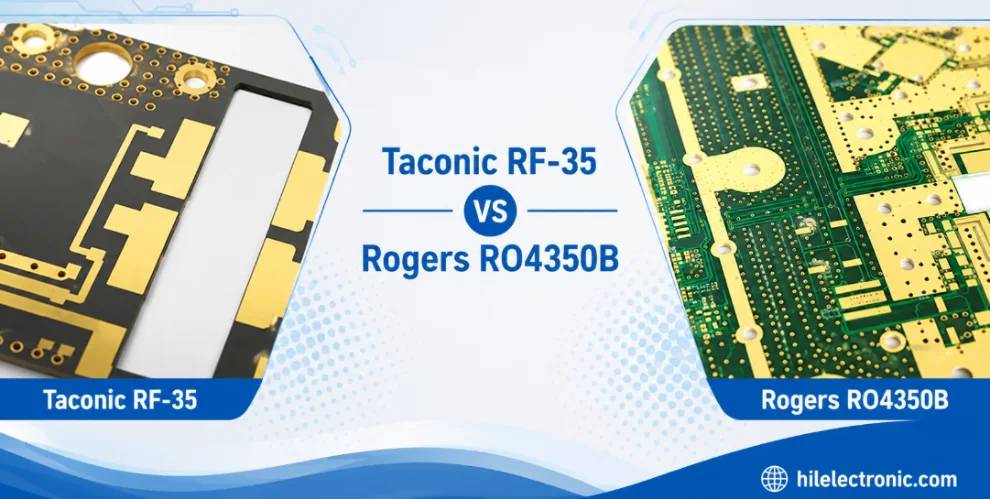
Taconic RF 35 vs RO4350B PCB
Table of contentsRF-35 vs RO4350B Procurement and...
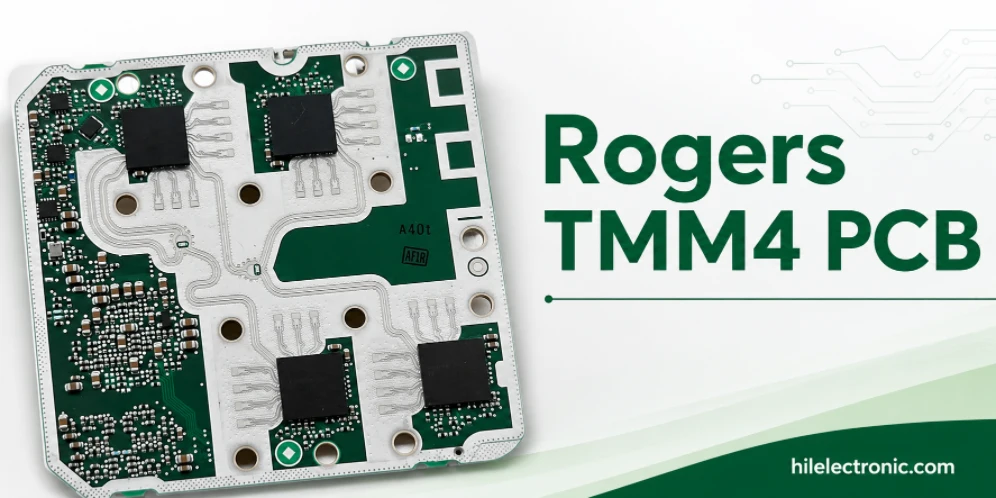
TMM4 Filter PCB Manufacturing
TMM4 filter PCB manufacturing is controlled by the...
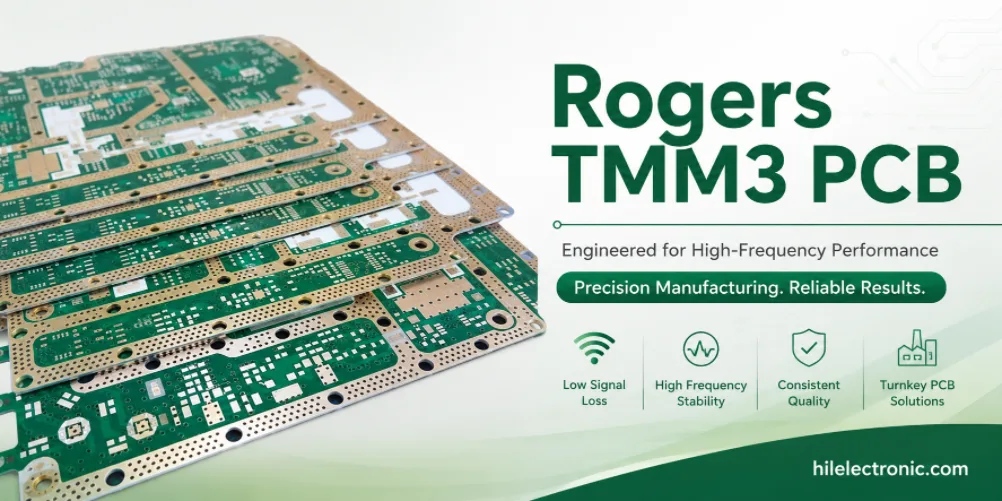
TMM3 PCB Manufacturing for RF Modules
TMM3 PCB manufacturing is most useful where the RF module...
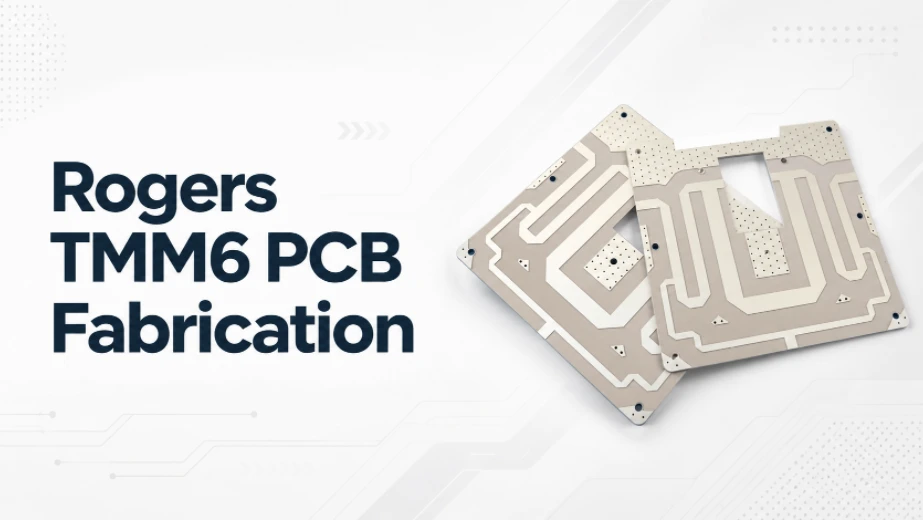
TMM6 PCB Fabrication
TMM6 fabrication is the process-control page for a mid-Dk...
How to get a quote for PCBs
Let’s run DFM/DFA analysis for you and get back to you with a report. You can upload your files securely through our website. We require the following information in order to give you a quote:
-
- Gerber, ODB++, or .pcb, spec.
- BOM list if you require assembly
- Quantity
- Turn time
For PCBA services, please provide your BOM (Bill of Materials) and any specific assembly instructions. We also offer DFM/DFA analysis to optimize your designs for manufacturability and assembly, ensuring a smooth production process.